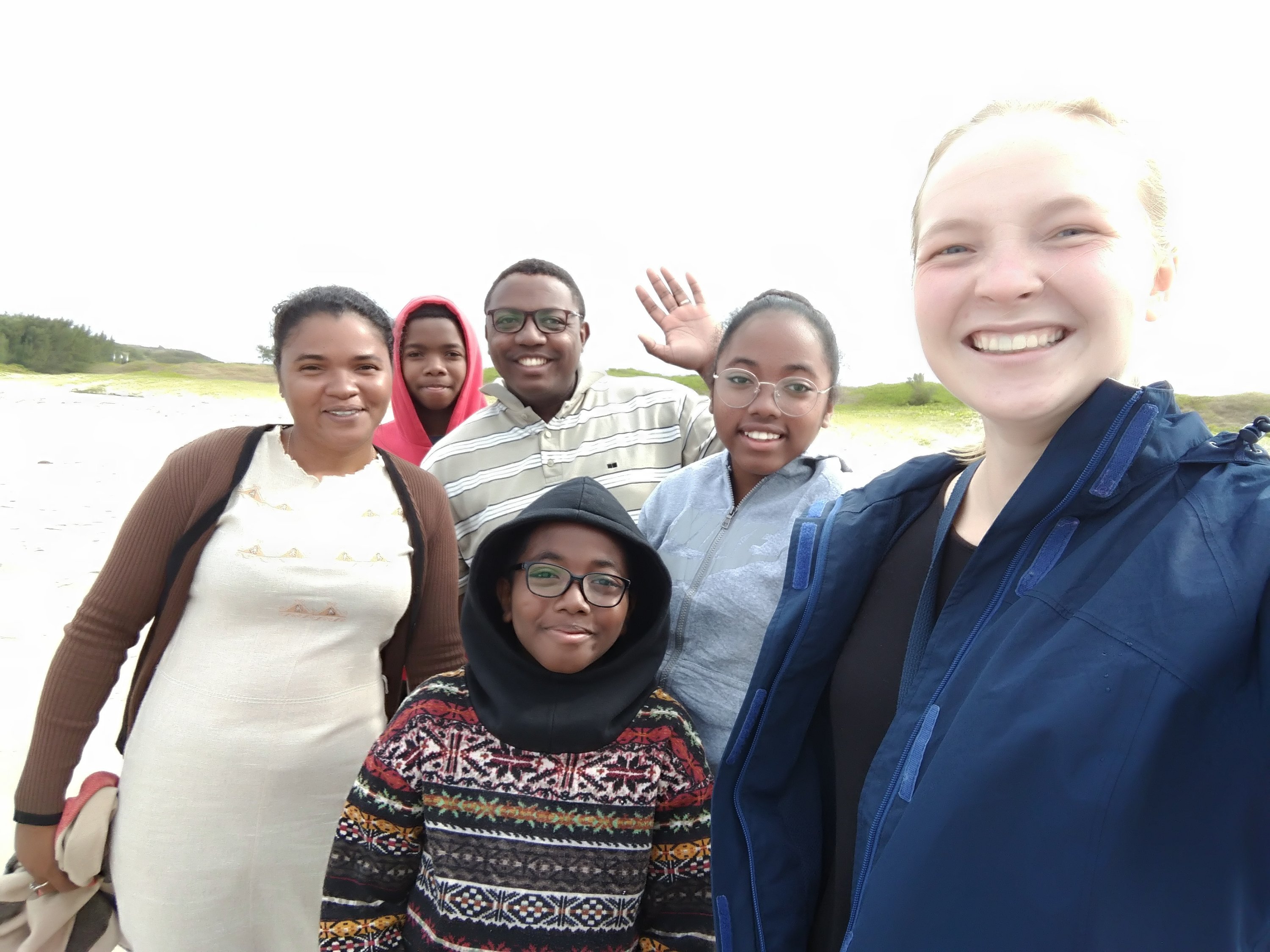
Tamana

Hebrews 12:1-2 Therefore, since we are surrounded by such a great cloud of witnesses, let us cast off everything that hinders and the sin which so easily entangles. And let us run with perseverance the race set before us and fix our eyes on Jesus, the pioneer and perfecter of our faith.
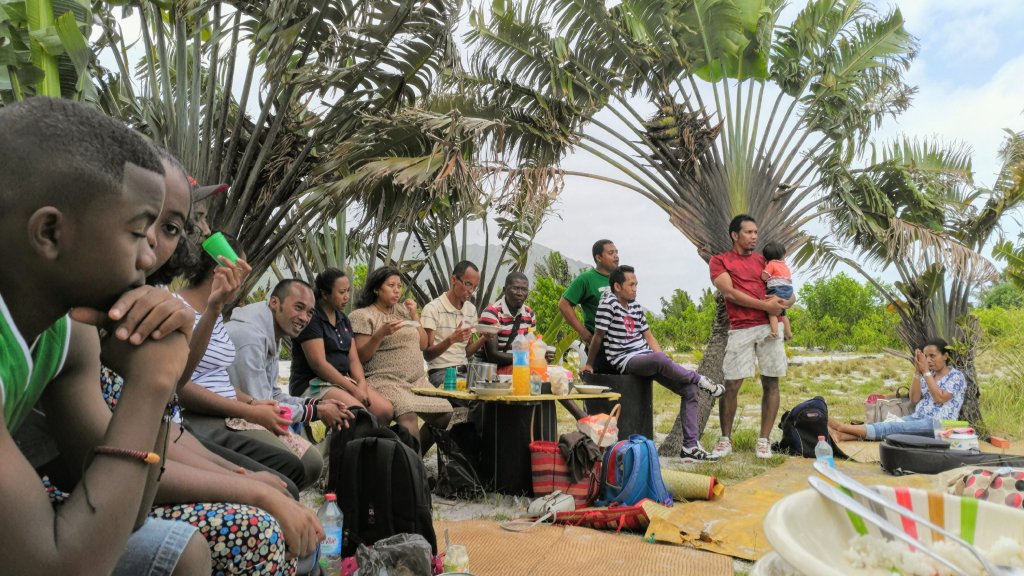
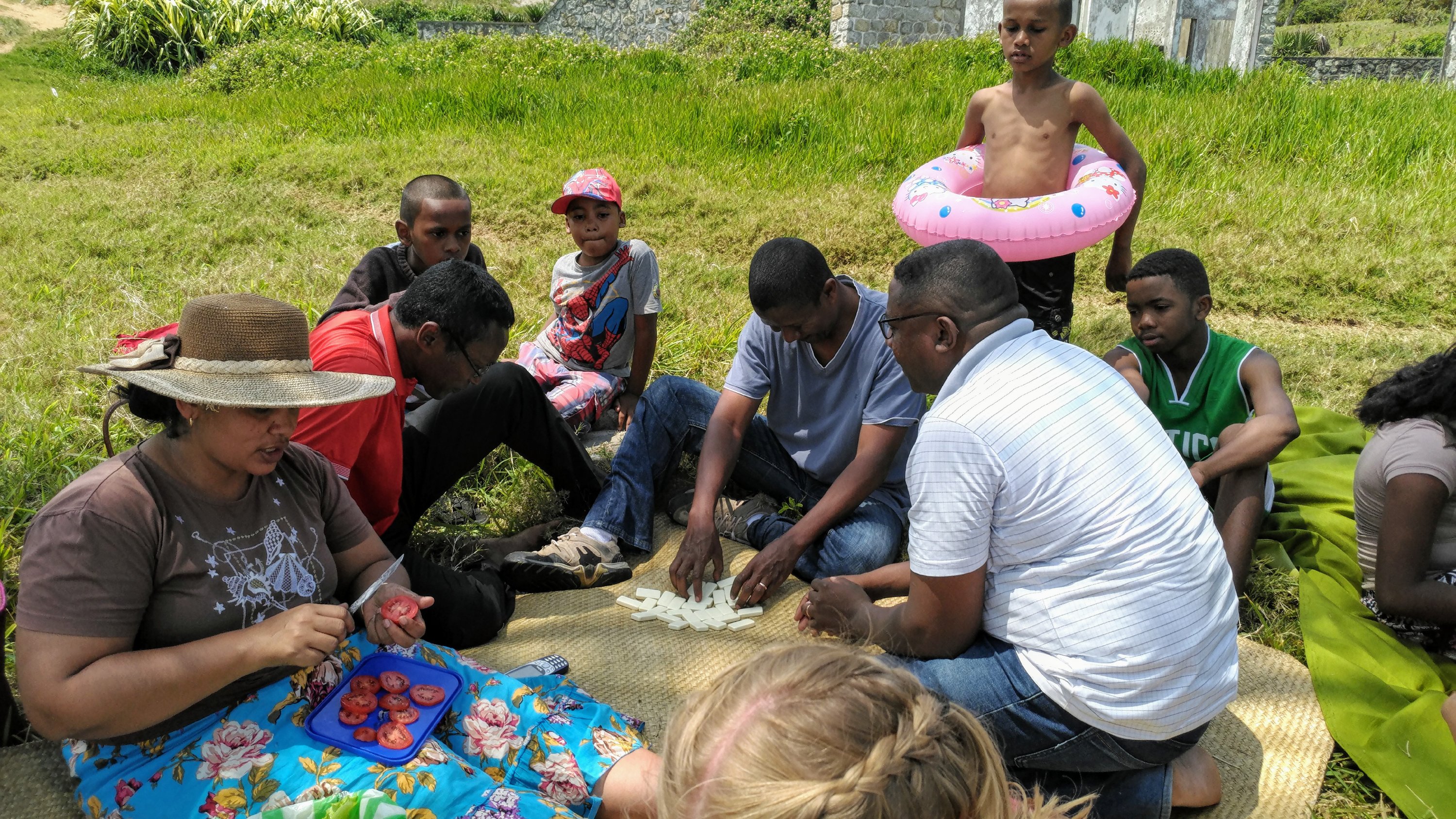
A picnic at the park with the teachers at my host father and siblings’ school.

Someone at the English Center asked during our last practice session, “What did you think when you first came to Faradofay?”

I smiled as I remembered that it took a week and a half for me to leave the house by myself.

I remember the way I followed my host mom around like a lost puppy wide eyed through the market. My senses took in so much color and movement that I couldn’t make sense of all the activity. I was shocked by the mountains of greens and clothing heaps spilling into the streets and the smell of the fish and meat in the sun. My first landmark was the “rano maimbo”, a puddle on the way to the market that never dries and always stinks.

I tentatively said salama to everyone who looked my direction or yelled vazaha to get my attention. It took two months to learn there are 6 different ways people say hello here.

In my first month of teaching, it took 75 minutes for me to walk one way to teach because the roads I was familiar with were the most scenic route to get there.

It took three months to figure out this town has 2 different names, both pronounced two different ways.

When I first arrived, people would ask me, “Tamana ve anao?”. I would look bewildered at my host mom until she translated, “Are you comfortable?”. Of course I would answer yes, I had people to take care of me and a place to eat and sleep.

The question died out, but in the last few weeks, people have started asking again. Now it doesn’t come from strangers. It comes from family friends, churchmates, the pastor and religion teacher at my school, and fellow choir members. People whose names and faces I know well who have played a part in making me feel welcome here.

Not only have they showed me endless patience, they are also the people playing an integral part in turning my comfort into a reality. They have gone out of their way to teach me how to do things that are second nature to them, or dumb down their conversations with me so I can understand their Malagasy, then work hard to decipher what in the world I’m trying to express.

They call me by name. They smile when they see me both in expected places and on the street. When they ask what’s famous, I genuinely try to tell them something after the obligatory “tsy misy”, not much.

In the first month, the start of the race, I kept wishing away the miles. I couldn’t wait until January or February when I would be halfway there, find a nice steady pace, have some friends, and be good at Malagasy…

Somehow February has arrived, but I still stumble every day through the obstacles, new and old that come on the path. My Malagasy skills may have improved, but my goals are changing along with my abilities.

But it is different. My response is a genuine, “Ie, tamana zah”, or yes, complete with a smile of gratitude. Part of it is becoming more comfortable with what I don’t know and accepting that I am always making mistakes. It is easier to cast off the mistakes, give them to the Lord, and persevere. My newfound comfort is all thanks to the great community, the cloud of witnesses the Lord provided, that continues to lift me up and carry me.

They have exorcised me of demons dozens of times, washed my feet, and prayed for me while laying their hands on my head. They have brought me to their homes and fed me mounds of mofo akondro, delicious fried breaded bananas resembling a corn dog. When I go home from work, I never take the 45 minute walk alone. There’s always someone eager to practice English, no matter if it means being late for lunch or delaying their market run. Strangers become familiar with me and start saying, “Fanasina”, the name of my choir instead of foreigner as I walk down the street.

The choir president welcomed me on my first day by telling the choir, “Our goal in the next 9 months is to make sure Alexis stays with us past the end of her year”. I laughed then, overwhelmed by the sea of curious faces looking at me. Now, knowing their faces, personalities, voices, and many (but still not all) of their names, I wish I could go back and see that moment again. They have made such a genuine and effective effort to create a home for me, and I am eternally grateful.

I’ve struggled to write a blog post for the last month, starting several and leaving them unfinished. Although it makes me feel unproductive and lazy, maybe its another sign of being tamana in this place and my everyday life. In good company, its amazing how fast the kilometers fly by.
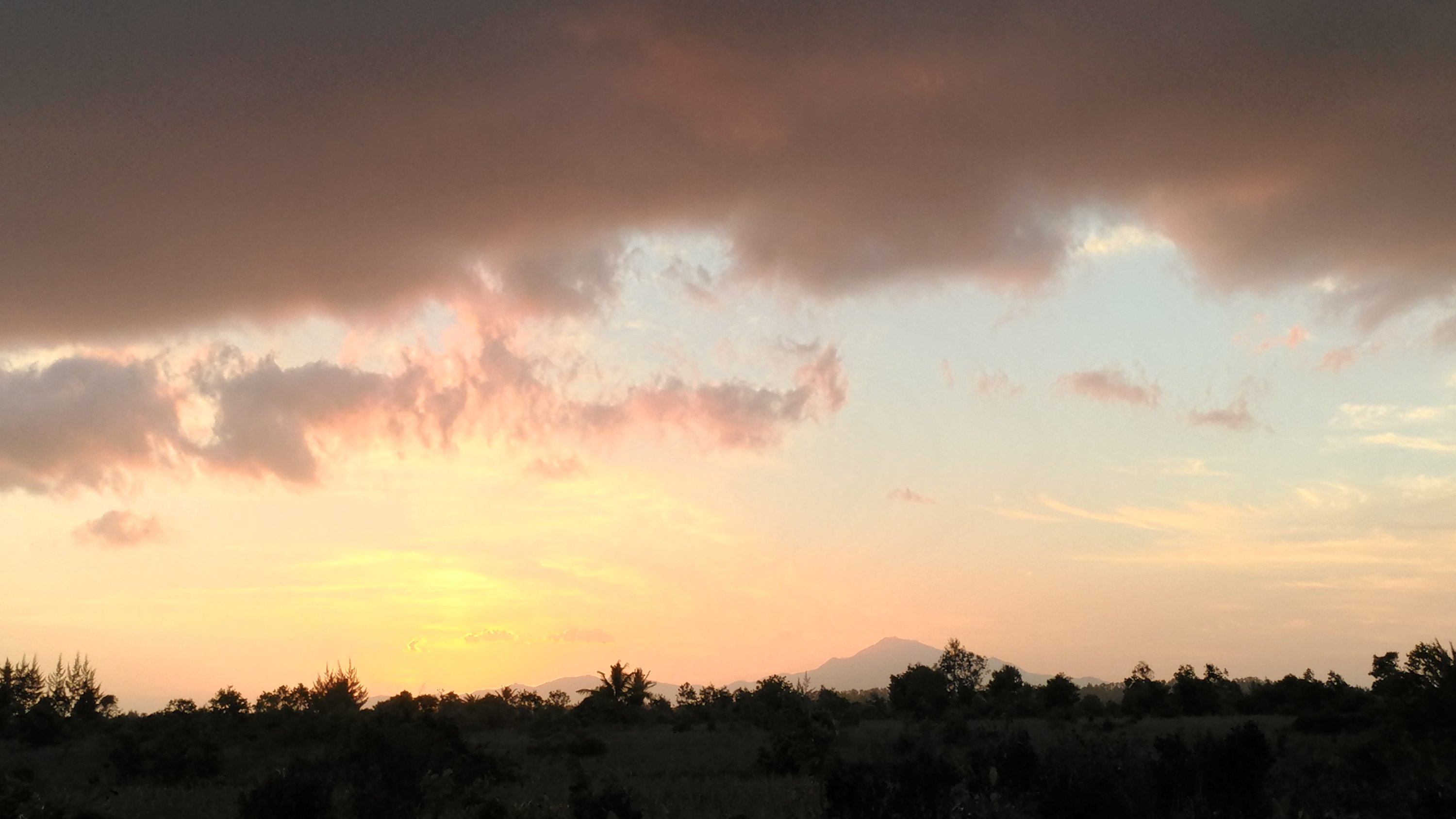
Avia hitsaoka azy

“Oh come, let us adore him!”

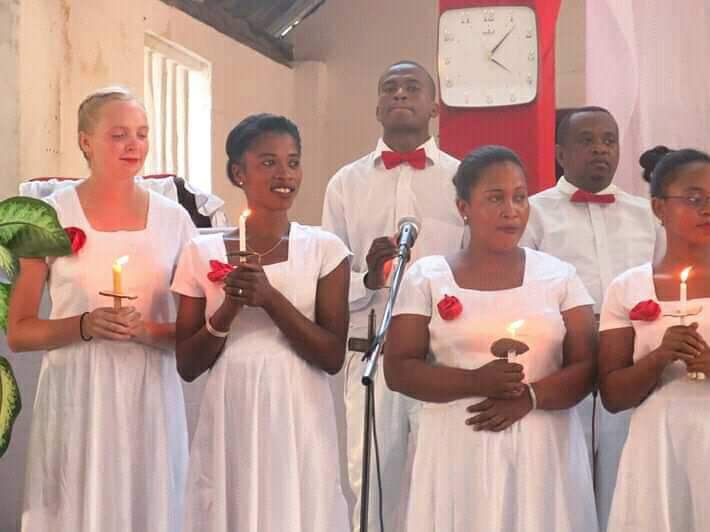
Singing happy birthday with FANASINA choir in our Christmas concert.

It was an ordinary day in an ordinary town with ordinary people. People followed a familiar routine or travelled to a familiar place.

And right in the midst of the expected was the setting for the most extraordinary of people to be born. Some saw the signs and knew of the miracle that had taken place, but most continued on, oblivious to the humble way in which the world changed.

But Mary treasured all these things and pondered them in her heart. LUKE 2:19

I can’t help but be in awe of Mary. How her life as a humble servant of God put her there to experience the coming of Christ into the world with only her husband to be and some really excited strangers from the field nearby.

For Mary, this was new. And maybe, as I celebrate her story in a new time and place, that’s why I feel so drawn to her.

Many American friends and family have asked me, what are some Christmas traditions in “Madagascar?” The question stops me in my tracks as I look around, searching buildings for traditions as flashy as strings of lights, big trees, blow up santas, Black Friday or toyland adds in the paper and on t.v., and white Christmas playing down the street.

How can I explain how subtle Christmas is without making it sound unappreciated? It is the things we love in everyday life amplified as we celebrate. Its singing with the choir (30 songs instead of 4), eating rice (and less neighbors go hungry), dancing in the living room with my family (to Christmas music and every other song we like). Its loud music coming from every direction until the power goes out, then getting even louder when it comes back on again. It’s fruit juice and trying new sides on our rice.

Its the number of henan’dambo (pork) stands exploding and taking over the market on Christmas eve. Its the extra few tents in the market lined with red and white dresses and a heap of toys on the table in the middle. It’s learning Oh Holy Night, Oh Come All ye Faithful, and Silent Night in Malagasy. It’s the massive tree in front of the Toby with flashing lights and a rainbow of garland, plus the 18″ version we have at home standing on top of the trash can. It’s Christmas pageants with songs, recitation and (baby Jesus) dolls galore on the last day of school and Christmas eve.

Its also sharing experiences and traditions I know. Its drawing stockings and cutting paper snowflakes to glue to the cement walls. Its baking and frosting Christmas cookies with my host siblings. Its teaching Christmas songs to my classes, then downloading 50 Christmas songs in English to share with my family just to listen to the same 5 that they really like over and over.

Its the way my host brother begs for my phone to play the Pentatonix version of Mary, Did you Know? on repeat every single day. Its watching my host dads face, his eyes closed and his head bowed and swaying as he heard it for the first time.

I’ve been gathering all these things. The new, the familiar, the ordinary, and the foreign. As we experience Christmas together, my family and friends categorize these activities differently than I do, making experiencing them together even more special. They create a masterpiece of a season filled with wonder, joy, and a greater sense of belonging with the people I share it with.

As she pondered those things in her heart, I am more certain than ever that Mary did know. Not the facts and times and details of how her sons life would unfold, but a deeper knowing. An underlying peace and assurance of Immanuel, God with us.

Vigil

A malagasy proverb: The death of an elderly person is like a sunset.

Night has fallen. We’ve eaten our rice and said our nightly prayer. The students are already in bed, resting for tomorrow’s day of studies.

At the sound of a knock, we slide open the deadbolt. “Vorona ve?” the visitor asks. Are you ready?

“Andao”, let’s go, I reply.

The night is pleasantly warm compared to the mid-day sun. Our route is convoluted as we pick up friends and weave through the neighborhood, then across town. We pass landmarks I know well in the daytime, but our nighttime rondevou makes everything new. The cracked pavement, askew cobblestones, and sandy paths turn the journey into an obstacle course. People we pass make their last purchases in the market as the sellers slowly gather their produce and merchandise.

As we arrive at the gate, I pull my lambohana out of my bag and wrap it clumsily around my waist as my friends coo, “Mahay ny fomba ianao”, you know the Malagasy custom.

The compound is huge and people fill every corner. Incandescent light bulbs inside the three houses flood the yard outside and mingle with the firelight and charcoal stoves to create a warm glow. People sit. Woven mats cover the houses and much of the ground outside, but they can’t be seen for the crowds lounging on them. Every night this week, they have gathered to honor the deceased. But this is the last and biggest night. Tomorrow morning, they will travel to church together, then to the graveyard.

The rain starts to fall, we were lucky to pick a slightly less cramped bench just under the great big tent. People by the fires scoop rice out of giant pots onto oversized plates. On top of the mound, they serve the cow that was slaughtered according to custom and to feed the crowd. Each plate has five spoons. We lean into each other on the bench to scoop the rice and attempt to saw through some of the beef. A plastic pail is placed in front of us. The rainwater running into it from the tent roof serves to cool down our ranonapango (tea made from the rice burnt to the bottom of the pot) as we scoop it out with a small tin mug we pass around.

As the rain slows, we go behind the house to change into all white. We scrambled to exchange dresses to find one that would fit my big vazah shoulders.

Once we all match, we walk across the tangled cords in front of the giant tent where the crowd has started to sing hymns. I know all the tunes, but few words. We unwrap the mix of lambohanas and hair caps women donated to keep the microphones dry. Its time.

Fourty-some voices boldly sing into the night accompanied by recordings blasted through the speakers. The spare micro is passed around as song after song and solo after solo go by. The people listen, sometimes singing along , sometimes in their own hushed conversations, drinking fanta or rhum straight out of the bottles.

The micro lands in my hands. I take steps forward as the piano music starts playing. We only practiced this song last night, but I’ve heard it all my life. As “I heard there was a secret chord…” comes out of my mouth, I am surprised to hear my own voice ringing through the night. A few people stand up with their phones, I hope its because they appreciate the song and not to show their friends how bad the vazah is at singing. I try to pull out my deeply rooted anxieties about singing once and for all.

I’m filled with gratitude for the choir behind me singing the hallelujahs and the way they prepared me for this by yelling, “mafy!”, to me every rehearsal to encourage me to sing louder. After all, they remind me, every voice is beautiful when you’re singing to God. I’m thankful for the effort the Fanasina choir puts into achieving their goal to convince me to stay here forever instead of one year. They’re breaking down more barriers within me than they can see. I pour the warmth I feel into the song and open my senses to the world around me. I want to remember this night forever.

Time moves fast, yet stands completely still. Every ten songs, we take a water break. As the night deepens, the friends and family of the deceased grow quieter. One by one, they fall asleep scattered on mats throughout the crowd. As the next day arrives, the bros in third and fourth voice put their arms around each others shoulders. The girls next to me intertwine their fingers with mine. As our concert lulls people to sleep or keeps them awake through the night, we grow closer. Tonight, I feel at home. When I make it to bed just before dawn, I know I will sleep peacefully.

Eyes of a Child

My host brother’s photo of a moment, playing dominoes with family friends.

By spending my time teaching and attending schools around town, I’ve encountered just how much of a privilege my own schooling has been. But for someone who just finished college, in this time and place I don’t feel educated anymore.

When my host siblings have questions on their assignments, they turn to their father for help. I want to fill my role as the older sibling and be part of their learning, but too much is lost in translation between Malagasy, French, and English. My explanations and understandings of math and science are tied up in a complex web of language barriers and cultural differences around learning.

The simplification of my communication has made me feel like a kid again. In this place and time, I am still a child. I’m just learning the rhythms of life: to eat, to speak, to go to school, and so much more. I stare like a “piso mijery tele” (cat watching tv) at grown-up conversations, at first trying to understand, then drifting off to my own thoughts until I am directly and simply addressed… or an English speaker summarizes the last 20 minutes of conversation for me in a single sentence.

People kindly bend over backward to translate, point at each word of the hymn we sing, or praise me for my feeble attempts at Malagasy saying, “efa mahay!” (You already can) when its certainly not true. Their care, sheltering, and the amount of grace they give me for not knowing the fomba (ways of life) is one of many ways my privilege shows up here. I can’t help but feel ashamed when I imagine what it would be like if one of my English Center friends with a vocabulary broader than mine fulfilled their dream of going to America. The passes and extra chances I’m so freely given here would be held much more tightly by skeptical Americans.

So what can I do with this knowledge? Understand how special my place is here, value it, and use as inspiration to be the best guest I can be.

At the dinner table, my brother and I sometimes play “tsy mikipy” (don’t blink) and have a staring contest. In English, I could tell him all about the cells and parts of the eye, their pathways to and through the brain, give a physics explanation of the lenses of his eyes and glasses, and even tell a story about dissecting human eyes in school. But when he gazes into my face and says, “blue”, he teaches me something new.

Between my frustrations, I’m learning that it’s a benefit to have the eyes of a child. The depths of our knowledge can blind us to the simple truths and beauties that we tend not to notice anymore. In Luke 18:16, Jesus says, “Let the little children come to me, for theirs is the kingdom of God”. The things I experience that challenge my understanding are an opportunity to rediscover how simply beautiful the works of God’s hands are.

So my friend, I invite you to pause for a moment. Rest a while. Just close your eyes and breathe. Then open them and soak in the beauty of creation. Fill your heart with wonder. In these past months, these have been the most holy moments I’ve encountered.

Mitsangatsangana

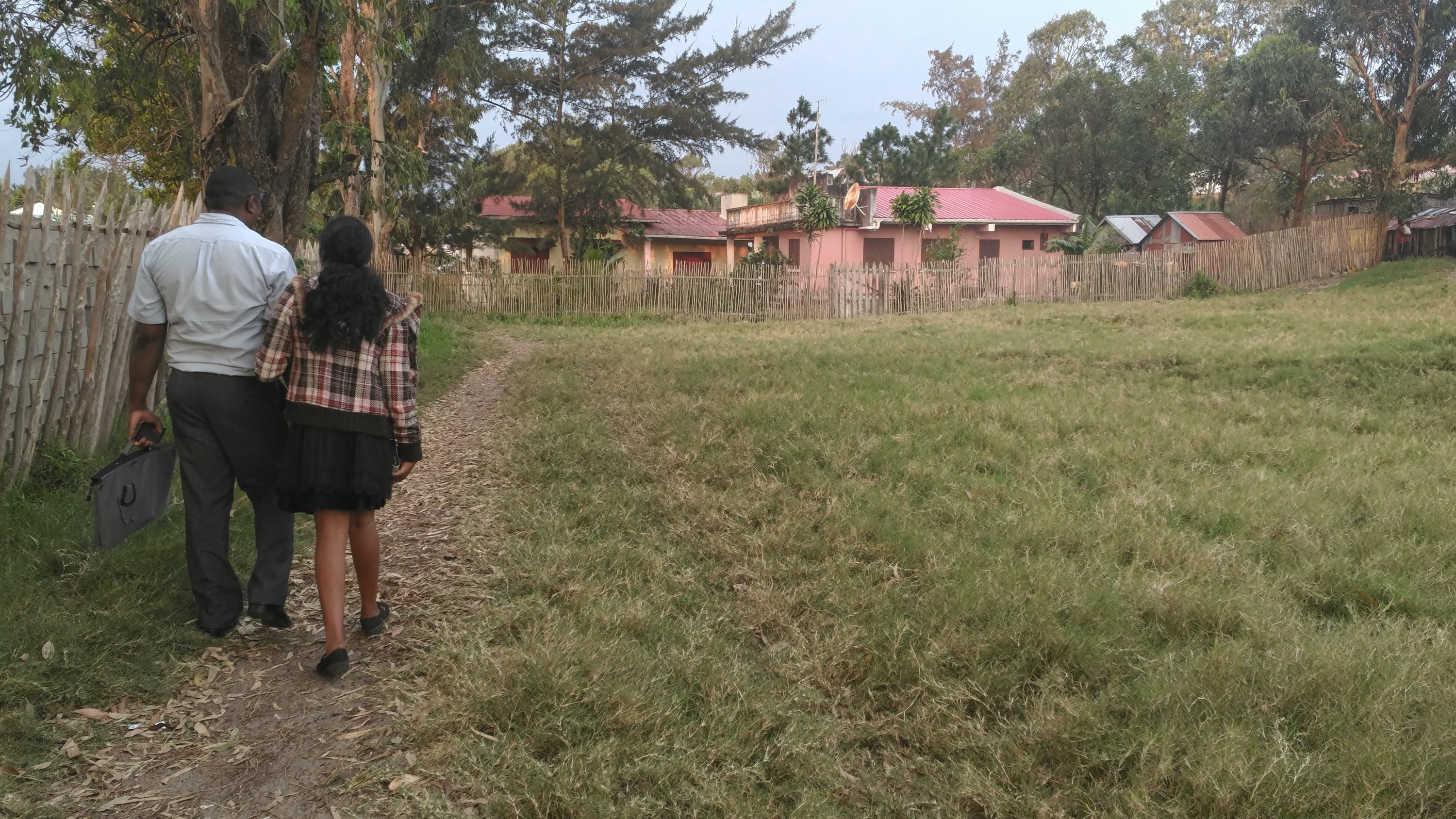
My host dad and sister heading to our home (the yellow and red house).

So far, my favorite malagasy word is mitsangatsangana. It embodies many concepts of things I like to do: go for a walk, a hike, or maybe even a picnic. Each day, as I go to work, I walk across town. As I go, fellow teachers, students, and friends alike ask if I will take a (bajaj) taxi. They are always surprised when I smile and say no.

As I travel, the bajajs honk and slow down, expecting me to wave for a ride. People on the street ask, “mitsangatsangana ve anao?” and I reply “eka, mandeha tomboka izaho” (yes, I go by foot) with pride.

Going by foot helps me to experience life: the good, the bad, the beautiful, and the ugly. It allows me to encounter the realities of the people I pass by. I also learn the many different impressions and expectations they have of me. No matter who approaches me, I make an honest effort to smile and speak a little bit of Malagasy.

In every speech someone delivers to convince me to take a taxi, they always ask, “Don’t you get tired?”. In their mind, its always too hot, rainy or windy for me to walk today… Their weather analyses are often right, but this is one simple way I can choose not to be above the reality the whole community is living in. My students walk, my neighbors walk, my churchmates walk, and I will walk also.

My feet are callused, blistered, and eternally dirty no matter how hard I scrub them. They have hosted several parasy (fleas) that my sister helps dig out of my skin with a sewing needle, leaving holes where the eggs were laid. They are burnt from the sun and from the oil I splashed making last nights dinner.

Yet they are soft compared to the feet of the people around me. Most feet are tough with thick soles from a lifetime of walking through the streets. Many feet are bare as they traverse the crooked cobblestones, blazing pavement and baking sand. Some feet are curled or twisted from an injury that never quite healed as the owner continued working to meet their immediate needs. Instead of being cushioned by American hiking sandals, their feet have experienced life and adapted accordingly.

My feet will never look quite the same as those around me, but they can trod the same paths and continue to show up day after day. They can take me to my favorite seller, the peanut lady who calls me bellasoa, or weave through the piles of everything from leafy greens to underwear flooding the sidewalk of the market. They can turn me down new paths as I use the mountain and the sea as a compass. They carry me on my way as I stroll with friends, strangers, or alone. When I choose to walk, I choose to embrace the unexpected and the fullness of life it brings.

The Value of Time

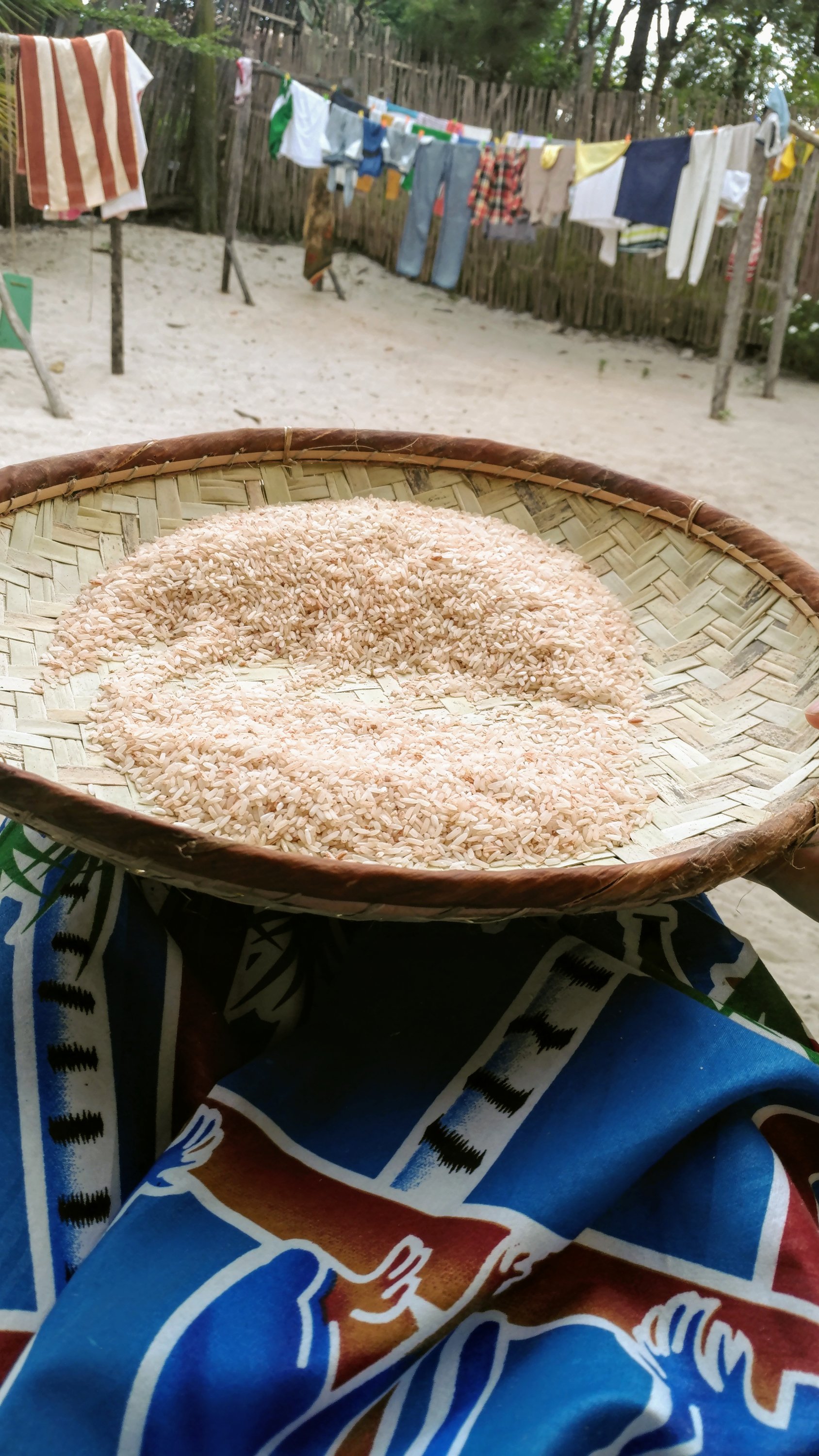
Photo: Sitting in the yard cleaning rice

When an English speaker asks me, “What is your biggest culture shock here?” I answer by making some joke about eating rice. Then, I talk about time and how different the “mora mora” culture is from American lifestyle.

I like to go. I feel fulfilled when I am so busy that there’s no time to eat and no time to sleep. But society doesn’t function that way here.

Recently, I told my host dad that patience is difficult for me. Patience with others isn’t hard, I’ve tested this on several occasions by waiting for hours with my family at the bank and even for professional meetings to start. On the other hand, I am not patient with myself. When it comes to learning Malagasy, I’m frustrated when I don’t understand a simple sentence or forget words that have been explained already. I’m impatient when I see Lucy peel a cassava in under a minute but it takes me ten. My default is to see time as a measure of success. Being fast is equivalent to being good.

My host mom loves to use the proverb time is money. It’s fascinating that we use the verb spend when referring to both time and money. Whenever a seller walks by the house shouting, “Fia!” (Fish) or, “Balahazo!” (Cassava) she waves them down to buy the laoka (side dish) for the next meal. Its worth the money to avoid another trip to the bazaar (market) today. I agree with this proverb, and this use of it is very American. But to be happy in Madagascar, the saying has to mean something completely different to me.

Right after my host mom says this, we spend all day washing the family’s laundry at the river. For each meal, rice is painstakingly picked over, tossed, washed, then finally cooked. With the shopping, preparing, and cooking, the side dish can take hours also. We go to church 2-3 times each week for a three hour service. We worked all weekend baking the perfect cake for a baptism party. The time and money my malagasy mother spends shows how deeply she cares about the people and the God she serves.

Just as we spend more money for the things we value, we spend more time for and with the people we value.

Time is how people show me they care. Sebastian my neighbor takes time to teach me malagasy any time I am home. My friend and bajaj (taxi) driver John took the time to pick me up in the pouring rain and drive me all the way across town without charging me. In conversation, people take time to slow down so I can pick up words and spend time waiting as I try to form a response with my limited vocabulary and grammar. My host family spends time sharing meals, laughing, and helping me find the things I need. The shepherds at the church spend time praying over each and every congregation member at two worship services every day of the week.

I thought giving time would be easy. Aren’t I already giving a year just by showing up? I’m learning its not that simple. Over and over within a day, I have to make a conscious effort to speak even when I know I can’t take the conversation very far. I have to bring energy to every interaction because I’m representing more than just myself. I’m working on spending time on the things I value: to learn, to laugh, to listen, and to be patient.

Every evening before going to sleep, I take one antimalarial pill. Each one is a physical representation of time. Sometimes I focus on how big or small it is. I always notice on how much space it took up, how many are left, and how much empty space is in the bottle. For now, the pills are plentiful, yet their number is finite. Was this tablet, this nugget of time, well spent?

As I fall asleep, I remind mysef there is time for praying. There’s time to invest in learning and in teaching. There is time to wait and time to be assertive. Most of all, there is time to slow down and value this life and the people and things that make it special.

Lasagne Recipe

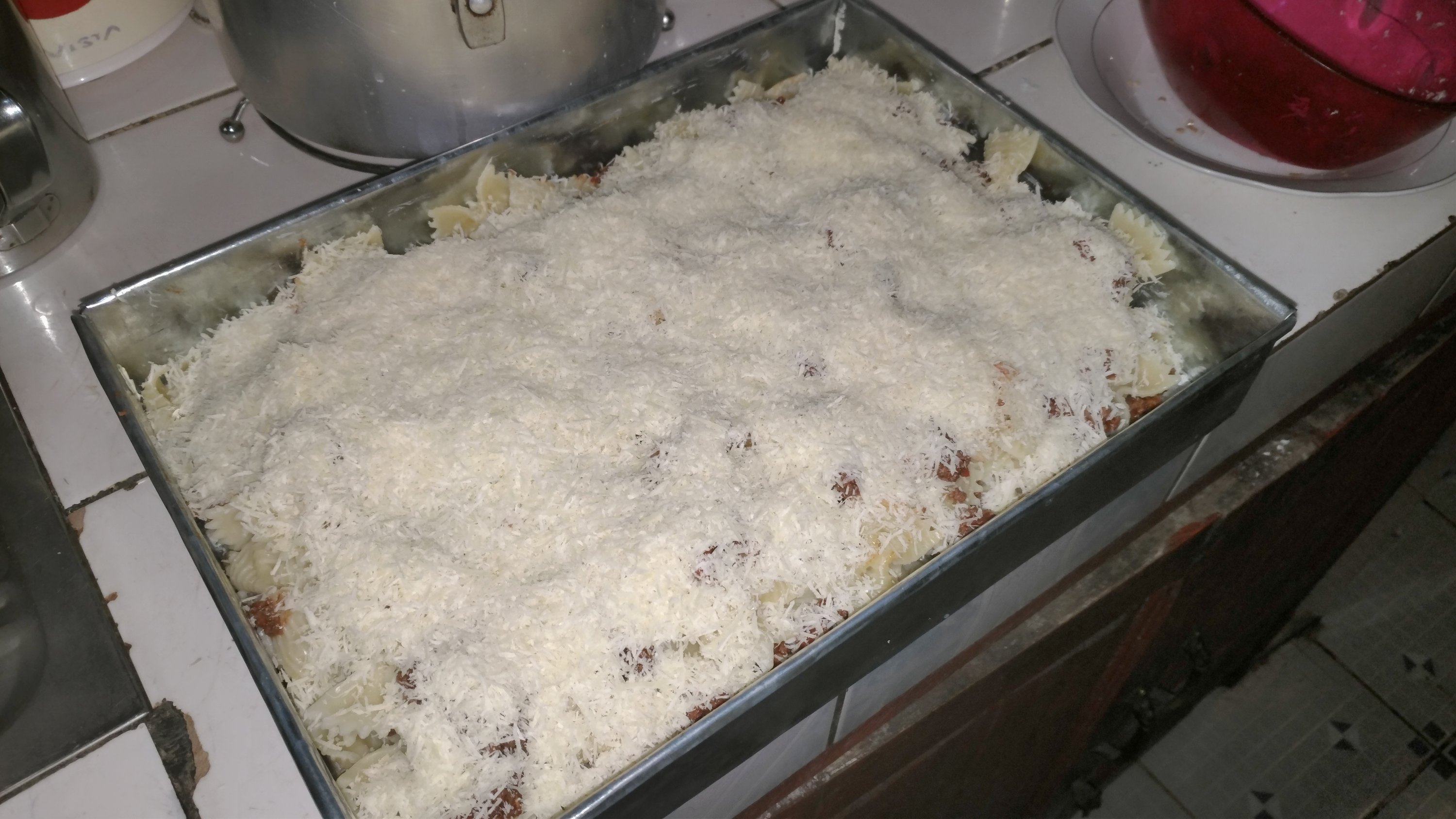
Step 5, ready to bakeSome of the most gracious and joyful people I’ve met.
Step 1: Remember the family recipe. If you aren’t quite sure, dig out the old cookbook or click on Google’s first search result.

Revision 1- Agree that it would be fun to make lasagne for your sister’s birthday because it would be fun to make special American… wait, Italian… food. Consider which ingredients you might need. Realize that nothing you would normally use for such a dish remotely resembles ingredients in the market here. Do we even have the correct type of pan? Ultimately, decide to wing it.

Step 2: Drive to the supermarket for groceries, pay at the register and drive home. Only follow this step if you don’t already have everything in your cupboard and fridge.

Revision 2- Ride a Toc-toc to the market because you are “late”. Arive at a mini mart and be surprised at their vast pasta variety… but the biggest noodles are bowties. Decide to go for a pasta bake vibe instead. Buy a solid round of cheese from the highlands that doesn’t resemble mozzarella or ricotta in the slightest, some tomato paste, and then take a 30 minute break to eat some homemade yogurt and chat with the shopkeeper even though you’re late. Continue stopping in hotelys (restaurants) and in the street for a couple hours whenever you see a friend until you make it through the market and buy the last 3 ingredients.

Step 3: Brown hamburger

Revision 3- First, be thankful there’s ground beef. Have your family start a charcoal fire, carefully balance the frying pan on the pieces and cover. Laugh with your host mom when she dumps 12 times more salt in than you would ever use because you piece together from her words that volcanic salt is less strong. Wonder whether your 10 year old brother is repeating “wow” because you are so bad at cutting tomatoes or he’s surprised your succeeding even if its sloppy.

Step 4: cook noodles

Revision 4- actually have your host sister do this on another stove outside even though this is her birthday dinner. Realize its her birthday dinner and feel guilty for this giant mess. Picture her spitting it out, then pull yourself together. Pray the onions you’re cutting aren’t too strong, then think if worst comes to worst you can blame them for a sudden onslaught of tears.

Step 5- layer ingredients in the pan. Noodles, ricotta, canned or jarred sauce, meat, cheese.

HOLD ON! That can’t possibly be next…

Revision 4.33- cook sauce over fire with the entire family helping. Don’t peel your eyes away as your host brother stabs the tiny tomato paste can with a massive knife all the way around to open it in case you can stop him from losing a hand. Dump in spices you only half understand the purpose of and insist on lots of garlic. Almost jump for joy when you add tomato paste and the concoction actually has a sauce-like consistency.

Revision 4.67- Stare in horror as the ground beef completely absorbs your perfect sauce, the only thing that looked like it belonged in lasagne. Hide your shock and calmly add water and try unsuccessfully to revive it. Your host mom is brave enough to taste it… and APPROVES!

Revision 5- spend 5 minutes finding a pan that has high sides and fits in the toaster oven. Try to grate that cheese wheel and discover it would be better suited for building a house. It tastes that way too, but your older host brother is on the task of making it work. Discover mama is sending the neighbor to buy laughing cow cheese that ultimately won’t be used. Try every pan before finding one that fits… well enough. Dump half the bowties in and do your best to cover it with ground beef. Pause for your inevitable laughter. If this doesn’t get you going, imagine them knowing what the last piece of lasagne you ate looked like. Remember there is no other food in the house; this is supper. Wait for your brother to defeat the brick cheese, praise him, then unceremoniously dump it on.

***chef’s tip: Learn how to make mayonnaise while you wait!

Step 6: Bake for 45min to an hour at 350 degrees covered. Turn up the heat a uncover to melt the cheese for 10 minutes at the end.

Revision 6-Shove in the toaster oven and try to shut the door at the moment the neighbor walks in. Feel bad that you sent him on a wild goose chase but become preoccupied with the oven only going to 250° maximum. Settle for 20 minutes at 200° because its 45 minutes before bed time and no one has started their homework.

Step 7: Let rest, then enjoy!

Revision 7- get up to check if the cheese is melting and push the time another 10 minutes when it doesn’t. Agree with your host family “tsy manina”, it doesn’t matter, and taste the cheese. Laugh so hard you have to sit down when the cheese crunches rather than being soft and melted. Be proud of the lack of disgust on your family’s face and grateful for their patience, friendship, and genuine care. Finally, happily consume the driest, yet somehow best, lasagne ever made. Matsiro be! Very delicious!

Motion

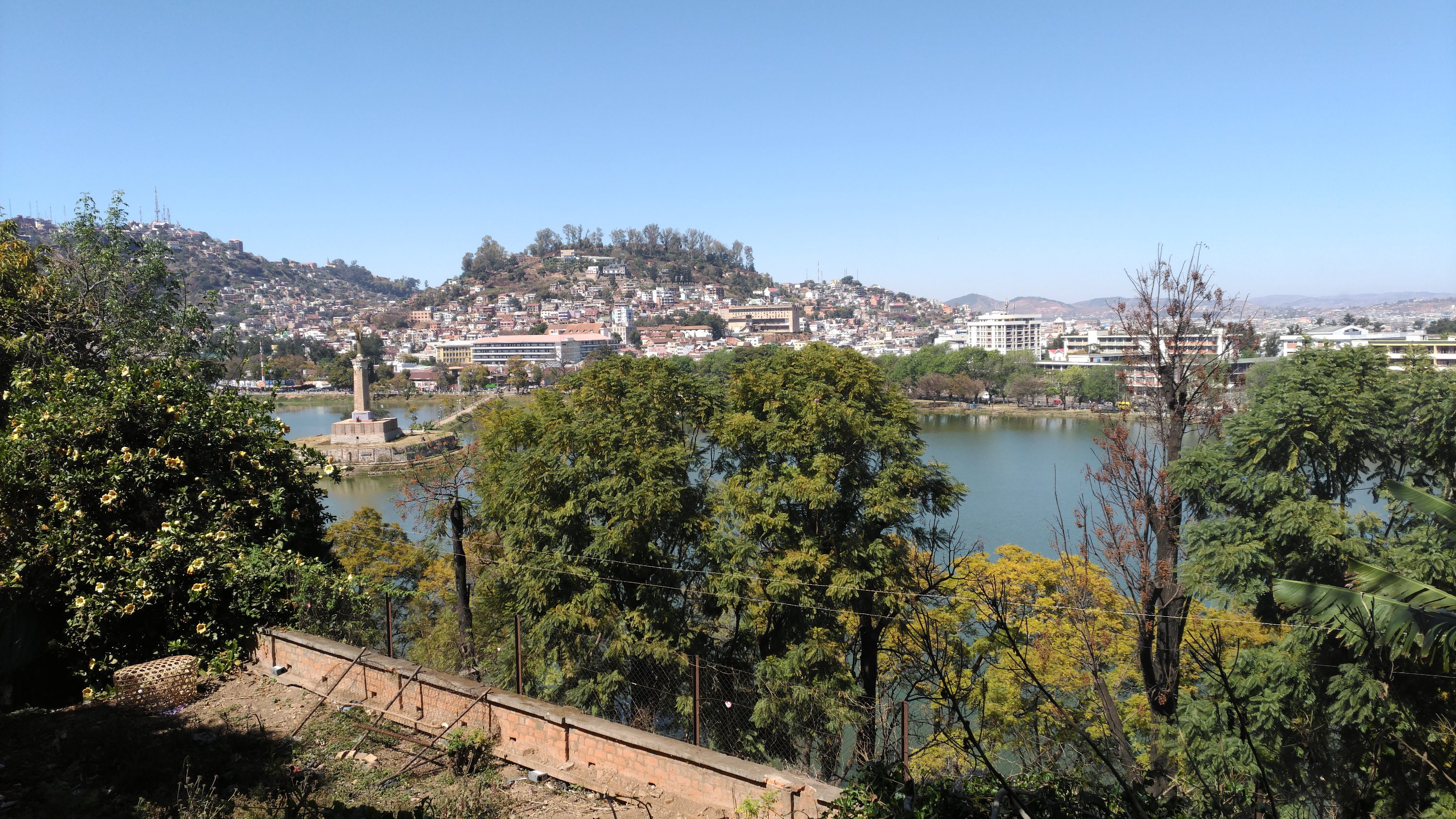
Overlooking Antananarivo

The street itself is alive.

There are no painted lines and no signs. Raised sidewalks are as navigable to drivers as the street below. Each one knows the size of their vehicle to the millimeter, sliding into every and any space available as they meander in the direction of their destination. Through the stream of vehicles weave motorbikes, bicycles, and carts. People take up the rest of the spaces. Some linger on the sides to chatter or sell items to passersby. Others fill in the cracks, filing in between vehicles and bending at the waist as they avoid collision with the side mirrors.

It looks like absolute chaos. This is not the world from which I came. The stripes and lights, bike lanes and sidewalks I’m used to serve a specific function and put a guided order to our lives. I’ve lived in a world of Google maps predictably leading the way to arrive at my destination perfectly on time. I hop in the car and turn on Spotify, disconnecting from the world and choosing my own beat to sing along to.

In contrast, the use of this street is universal. No matter the method of transportation, somehow everyone moves together. As I watch, its flow is so alluring. Like a stream, the current rushes in some parts and slows in others. Some places widen and some narrow either from design or incident. The lack of predictably keeps people in their toes. Everyone is alert, as keenly aware of those around them as they are of themselves.

I am a disturbance to the flow. As we walk by, people notice we haven’t gotten our sea legs yet. I am a lake girl who hasn’t navigated the rivers before. I feel the rhythm and hear the calling of the beat, but I haven’t learned how to dance.

How long will it take? Weeks? Months? Longer than the time I have here? All I know for sure is there is much to learn. I want to navigate the roads and be a part of the song being created. There’s already a full orchestra, but this guest musician is jumping in with hopes to contribute to the beauty of the piece.

Pre-departure thoughts

It is so easy to be caught up in the chaos and uncertainty of moving across the world.  My mind so easily spirals, telling me that I am slamming the door on my life and leaving everything and everyone behind.  How is this even happening?!

Then I remember your support: the well wishes, prayers, and conversations filled with anticipation we have shared.  The $15,000 that friends, family, and strangers have invested in me because they believe that this is worthwhile.  The time, money, and the coordination that makes all of this possible have come from a giant community of supporters that believe in the value of global connections, relationships, and life transforming experiences.

Each time I remember this, I am humbled yet again. 

Six months ago, I imagined my life would be headed in a much different direction. I was expecting to round off my senior year at Luther and get a nice stable job for a while to help me afford to eat in grad school.  However attainable and logical I seem to think my plan is, God always seems to have a much better one. Although I never could have seen it, He has been molding me for this year of service. I cannot wait to answer the call.

 I know that the time I spend in Madagascar will be transformative and that my understanding will be stretched in ways I won’t know until I am in the moment.  I know that there is nothing I can do to prepare me for this experience. I have searched through dozens of alumni blogs and found connections to YAGM alumni and people from Madagascar who have offered me their unwavering support. There may be many common threads between my experience and theirs, but I can’t wait to meet the people who will walk alongside me and make this year worthwhile.

There is grief that comes with leaving.  But without goodbyes, how could we know the pleasure of a hello and a new adventure?  Where would we find a story to share or new friendships? I lean into the farewells relying on the hope of a joyful reunion. 

Sending prayers and love your way.  I can’t wait to see you again.

Design a site like this with WordPress.com
Get started